Updated October 2026
Some people notice their face looks wider or more square at the bottom than they would like, especially in photos. Others simply want a cleaner, more refined jawline without surgery. If that sounds like you, you may have heard that Botox can help.
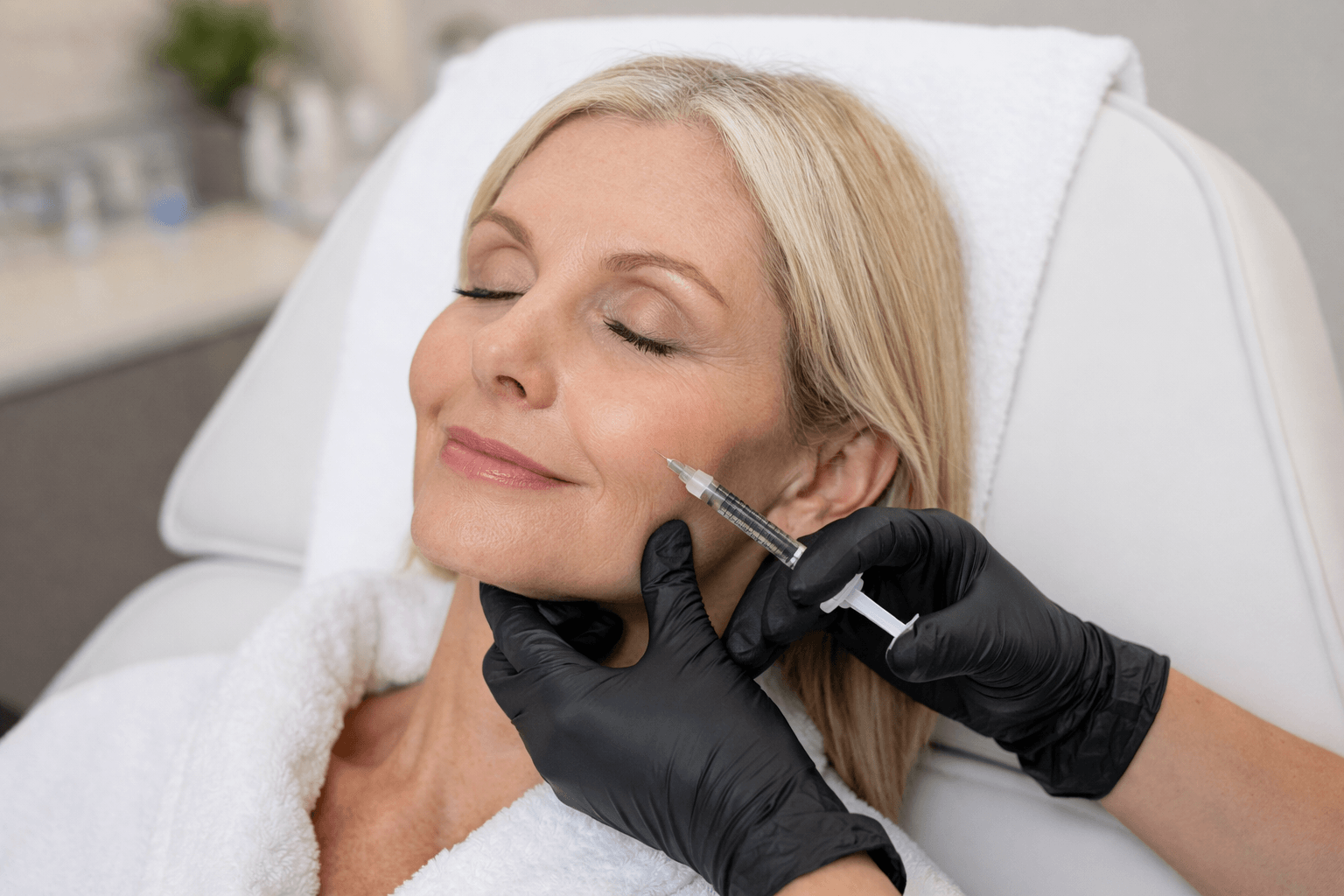
It can, for the right person. When a strong chewing muscle is part of what makes the lower face look wide, a neurotoxin can relax that muscle and gradually soften the contour. Here is how jawline treatment with Botox works, who tends to be a good candidate, what results look like over time, and how it fits into a personalized plan at Envy Medspa in Wichita Falls.
Yes, in many cases. When the lower face looks wide because of a large masseter muscle, the thick chewing muscle at the angle of the jaw, a neurotoxin can relax it so it gradually becomes less bulky. As the muscle reduces in size, the jawline can look softer and more defined.
At Envy Medspa, jawline definition is one of the uses listed for Botox, Dysport, and Letybo. Using a neurotoxin in the jaw muscle for this purpose is considered off-label, which means it is a common practice based on provider training and published research rather than a specific FDA-approved indication. Your injector will explain what that means for you during your consultation.
A square or wide lower face can come from muscle, bone, or fat, and often a combination of all three. Botox only affects the muscle part, so understanding what is behind your jaw shape is the first step.
Like any muscle, the masseter can become larger with heavy use. Habits such as frequent gum chewing, or clenching and grinding the teeth, can contribute. Genetics also play a big role, and some people simply have naturally strong jaw muscles.
If your jaw width comes mostly from the shape of the jawbone, a neurotoxin will not make a meaningful difference. Bone structure is not changed by injectables.
Sometimes what looks like a heavy jawline is actually fullness under the chin. In that case, a different treatment, such as Kybella, which is FDA approved for fullness under the chin, may be a better fit.
During a consultation, your injector may ask you to clench your teeth so they can feel how much of the jaw width comes from the muscle.
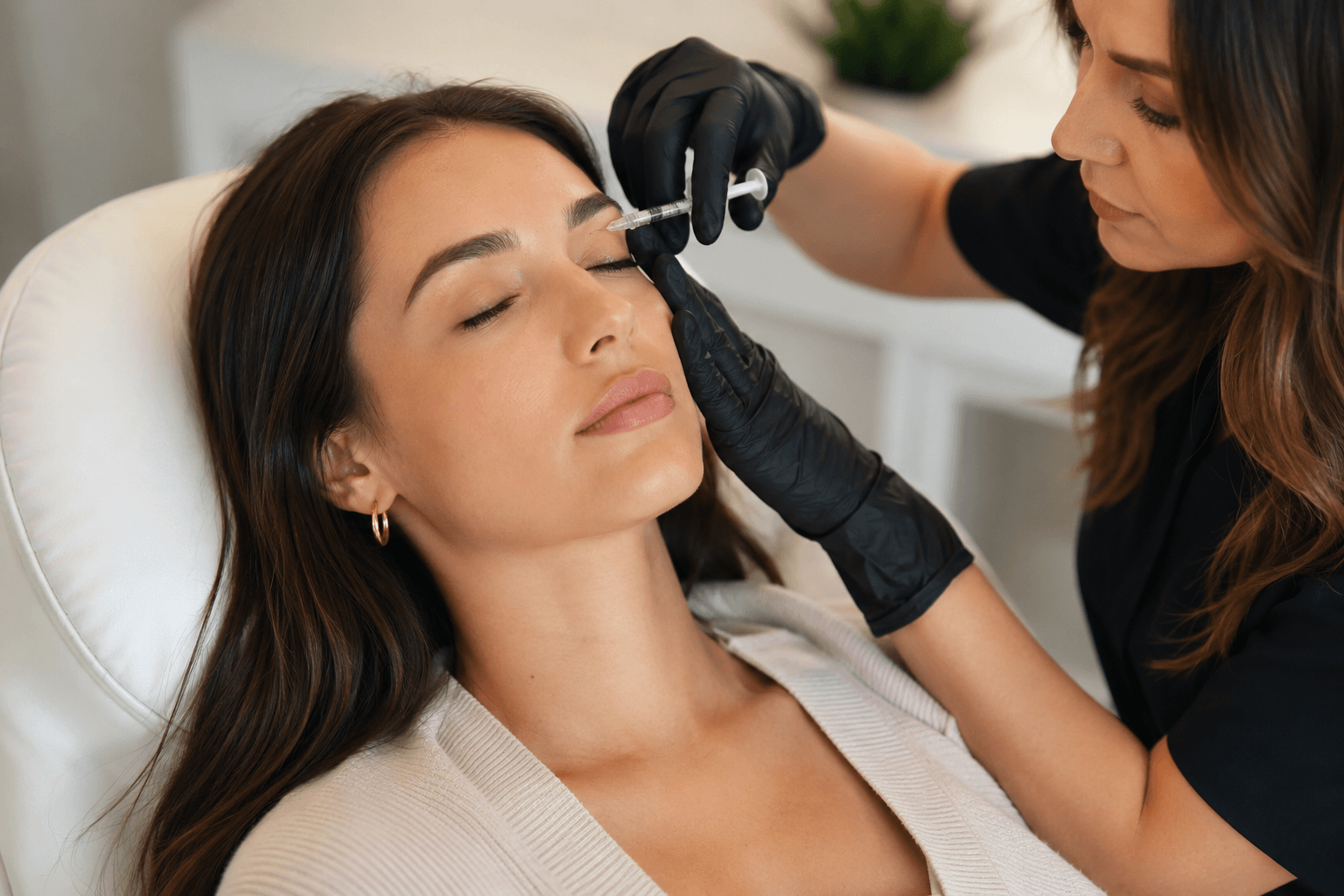
Botox works by temporarily blocking the nerve signals that tell a muscle to contract forcefully. When the masseter is used less intensely over several weeks, it gradually becomes smaller, similar to how any muscle shrinks when it is not worked as hard. As it reduces in size, the lower face can look slimmer and more contoured.
This approach is well studied. A comprehensive review on botulinum toxin for masseter muscle hypertrophy describes it as an effective, minimally invasive option for contouring the lower face when patients are carefully selected. The mechanism behind all botulinum toxin treatments is also explained by MedlinePlus, the National Library of Medicine's consumer health resource.
Jawline results take longer to appear than results for forehead lines. Visible changes usually develop gradually over several weeks, because the goal is to reduce the size of the muscle, not just relax movement.
This is an important difference. With frown lines, the muscle relaxes and the lines soften within days. With the jaw, the change in contour comes from the muscle slowly getting smaller, so patience in the first couple of months is key.
Neurotoxin results at Envy Medspa typically last about 3 to 4 months, depending on your metabolism, dosage, and treatment area. Many patients return for maintenance every few months to keep their contour consistent. Your injector will recommend a schedule based on how your muscles respond.
Many men want a jawline that looks sharp and balanced, not heavy. Overly bulky jaw muscles can make the face look wide or square, especially in photos and on video, and a neurotoxin can reduce that bulk while keeping a strong, masculine jaw.
For men, the goal is usually refinement rather than a dramatic change. A conservative dose and careful placement help keep the result natural. Because treatment takes only minutes with no downtime, it is easy to fit into a busy schedule at our downtown Wichita Falls office.
Many women choose jawline treatment to create a softer, more tapered lower face, sometimes described as a V-shaped or heart-shaped contour. When the jaw muscles are large, the face can look square from the front, even with a slim build.
Jawline definition can also be part of a broader plan. Dermal filler can add structure to the chin or jawline, while Kybella addresses fullness under the chin. Founder Emily Hays, PharmD, takes an anatomy-based approach that considers facial proportions, muscle movement, volume loss, and patient goals before recommending any combination. As she says, "The goal isn't to make you look different. It's to make you look like the best version of yourself."
For clients who invest in consistent, high-end aesthetic care, jawline definition often works best as part of a long-term facial balancing plan rather than a one-time treatment. Regular visits let your provider monitor how the muscle responds, adjust the dose, and coordinate jawline care with other treatments.
Envy Medspa's approach to long-term care focuses on education, follow-up, and customized maintenance plans. You can view examples of natural-looking results on the before and after page.
Jaw pain, clicking, headaches, worn or cracked teeth, or trouble opening your mouth should be evaluated by a dentist or physician. These can be signs of teeth grinding, clenching, or temporomandibular joint (TMJ) disorders, which need proper diagnosis and care, such as a night guard to protect your teeth.
Cosmetic jawline treatment is focused on contour and is not a substitute for that evaluation. Let your injector know about any jaw symptoms so they can factor them into your plan.
Most side effects are mild and temporary. Common ones include tenderness, mild swelling, or bruising at the injection sites, and some people notice temporary chewing fatigue with very tough or chewy foods.
Less commonly, neurotoxin can affect nearby muscles and cause a temporary change in smile symmetry, which is why precise placement matters. The Mayo Clinic notes that in rare cases, the effect can spread beyond the treatment area. Seek medical care right away if you have trouble swallowing, speaking, or breathing after treatment. Neurotoxins are generally not recommended during pregnancy or breastfeeding.
You may be a good candidate if you:
It may not be the right choice if your jaw shape comes mostly from bone, if you have certain neuromuscular conditions, or if you are pregnant or breastfeeding. A consultation will help you understand your options.
When large jaw muscles are part of the reason your face looks wide, Botox can gradually soften the lower face and create a more defined jawline. Results develop over several weeks.
Most people feel only brief pinches. The treatment takes just a few minutes and usually involves a few injections on each side.
Some people notice mild chewing fatigue with tough foods for a few weeks. Everyday eating is typically not affected.
Many people see a change after one treatment, with maintenance every few months to keep results consistent. Your injector will tailor the schedule to you.
No. Cosmetic jawline treatment focuses on contour. Jaw pain, clicking, and other TMJ symptoms should be evaluated by a dentist or physician.
Yes. Many patients pair a neurotoxin with dermal filler in the chin or jawline for added structure. Your injector will recommend the right combination.
A wider jaw is not always about weight or bone. Sometimes it is simply a hardworking muscle that could use a break. Botox offers a quick, non-surgical way to refine the lower face, with results that build gradually and look like you.
Ready to find out if jawline definition with Botox is right for you? Visit Envy Medspa at 813 8th St Suite 220 in Wichita Falls, call 940-500-1989, or book a consultation online. You can also explore our injectable treatments, meet our team on the About page, or return to the Envy Medspa homepage.